
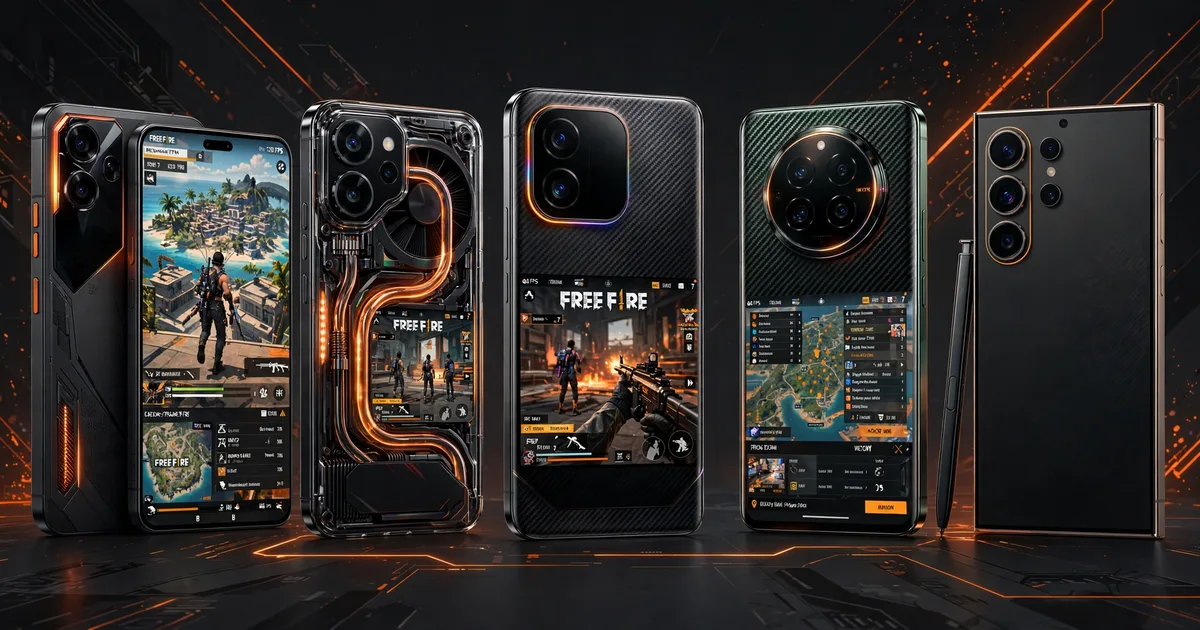
Best Phones for Free Fire (Budget to Flagship)
Your phone is your controller, and in Free Fire the controller matters more than in almost any other mobile game. Drag headshots punish touch latency, low refresh rates, and thermal throttling in ways that casual games never reveal. This guide ranks what to actually look for in a Free Fire phone, from budget picks under $200 to flagships, based on the specs that move your headshot rate. Whatever you buy, pair it with a tuned setup from the official Macro Panel download page.
Our review team, led by Viktor Kane, tests every panel guide on real hardware from a 60Hz Galaxy A13 to a 120Hz Pixel 8, so the recommendations below come from measured gaming behavior, not spec sheets. Prices shift by region, so we focus on spec tiers you can map to whatever is available locally.
Key takeaways: For Free Fire: minimum 90Hz display, 6GB RAM, and a chip that holds 60 FPS without throttling. Touch sampling rate matters more than megapixels. Budget kings exist under $200, the sweet spot sits at $250 to $400.
The specs that actually matter for Free Fire
Ignore camera megapixels and marketing. These five specs decide your Free Fire experience:
- Refresh rate: 90Hz minimum, 120Hz ideal. Higher refresh makes drag tracking visibly smoother and reduces the perceived input lag on flicks. This is the single biggest feel upgrade.
- Touch sampling rate: 240Hz or higher. How often the screen reads your thumb. A 120Hz screen with 240Hz touch sampling aims better than a 120Hz screen with 120Hz sampling.
- Sustained performance, not peak benchmarks. A chip that holds 60 FPS for an hour beats a faster chip that throttles after 15 minutes. Look for phones with vapor chamber cooling or a reputation for cool running.
- 6GB RAM minimum, 8GB comfortable. Free Fire plus a panel overlay plus background services needs headroom. 4GB phones stutter when the overlay is active.
- Battery: 5000mAh or more. Long sessions are the norm. Pair capacity with the endurance habits in our battery guide.
Budget tier: under $200
You can absolutely compete on a budget phone. What to hunt for: a 90Hz display (increasingly common at this price), 6GB RAM, and a Snapdragon 6-series or Dimensity 6000-series chip. Avoid anything still shipping with 60Hz or 4GB RAM, those two specs alone will cap your ceiling no matter how good your thumbs are.
On budget hardware, settings discipline matters more than on flagships. Run our low-end lag fix guide before judging any budget phone, half of budget complaints are settings problems, not hardware problems.
Sweet spot tier: $250 to $400
This is where Free Fire players should shop. At this price you reliably get 120Hz AMOLED displays, 240Hz+ touch sampling, 8GB RAM, and chips like the Snapdragon 7-series or Dimensity 8000-series that hold 60 FPS for hours without breaking a sweat. Last year's flagships also fall into this bracket refurbished, and a used flagship with 120Hz often out-aims a new mid-ranger.
This tier is also where Macro Panel's heavier features shine: the overlay, GFX tweaks, and max graphics settings all run comfortably with 8GB of RAM behind them.
Flagship tier: $600+
Flagships buy you three things: 120Hz+ LTPO displays with the lowest touch latency, chips that never throttle, and the best sustained thermals. Do they make you a better player? Marginally. A flagship will not fix bad drags, but it removes every hardware excuse and makes high-refresh aim feel effortless.
Honest take from our testing: the jump from budget to sweet-spot is transformative, the jump from sweet-spot to flagship is a luxury. If your budget is tight, buy the $300 phone and spend the difference on nothing, your thumbs are the upgrade.
What to avoid
- 60Hz displays. Non-negotiable now. A 60Hz phone is a competitive handicap you pay for every single fight.
- 4GB RAM. Free Fire plus the Macro Panel overlay will stutter. This spec alone disqualifies otherwise decent budget phones.
- Curved edge screens. They look premium and misread thumb drags at the edges, exactly where rushers swipe. Flat screens aim better.
- Gaming phones with tiny batteries. Some gaming-branded phones chase thin designs with 4000mAh cells. For Free Fire marathons, a boring 5000mAh mid-ranger outlasts them.
- Buying for the camera. A 200MP camera does nothing for your headshot rate. Every dollar in the camera is a dollar not in the display or cooling.
Shop like a player, not a photographer. Display, touch sampling, sustained chip performance, RAM, battery, in that order.
Setting up any new phone for Free Fire
- Update the OS, then enable the highest refresh rate in display settings.
- Install Free Fire and Macro Panel, then run the DPI calibration for your exact screen size.
- Dial in sensitivity from scratch. Never import old values blindly, a new screen size and refresh rate changes everything.
- Play 10 casual matches before ranked. New hardware needs a break-in period for your muscle memory.
One more thing: whatever tier you buy, the no-fake-dates freshness of your setup matters less than its stability. A stable 60 FPS on a $180 phone beats a throttling flagship every single match.